How to Live on Less Money (Without Hating Your Life)
How to Live on Less Money (Without Hating Your Life)

Photo by Ansel Lee on Pexels
Most people think living on less money means giving up everything fun. No eating out, no new stuff, no life. But from what I can see, the people who actually pull it off barely feel like they're sacrificing anything at all — because they cut the right things, not everything.
Here's how to make your money go further without turning your life into a punishment.
First, Understand What "Living on Less" Actually Means
Living on less money doesn't mean living like a monk. It means being intentional about where your dollars go — keeping the things that make life good, and quietly cutting everything else.
The data backs this up: a recent BestMoney study found that 83% of Americans now consider themselves frugal. But most of them didn't become frugal by giving up everything they love. They started cutting the easiest stuff first — the subscriptions they'd forgotten about, the takeout they ordered out of habit, the gym membership that existed purely to make them feel guilty.
The goal isn't to spend as little as possible. The goal is to spend money on things that actually matter to you — and stop leaking it everywhere else.
Step 1: Know Where Your Money Is Actually Going
Before you cut anything, you need to look at the actual numbers. Not a rough idea in your head — the actual numbers. Pull up your bank statements for the last two or three months and add everything up by category.
Most people are genuinely shocked by what they find. That "$5 here and $12 there" spending pattern adds up fast. A person who spends $5 a day on coffee is spending $1,800 a year on coffee. That's not a judgment — that's math.
Once you can see the full picture, patterns jump out. You'll notice a bunch of subscriptions you barely use, meals you ordered because you were tired and it was easy, and categories where your spending is wildly out of proportion to the enjoyment you got.
Step 2: Cut Your Biggest Expenses First
The biggest mistake people make when trying to spend less is obsessing over tiny stuff. They skip lattes but ignore the $200/month car insurance they could renegotiate, or the $150/month phone plan they could swap for a $25 alternative.
The highest-impact areas to cut are almost always the same:
Housing
Housing is most people's single biggest expense, and the differences are enormous. Getting a roommate, moving to a slightly less expensive neighborhood, or negotiating your rent at renewal time can all free up hundreds of dollars a month. Even small adjustments to your housing costs compound massively over time.
Transportation
According to the U.S. Bureau of Labor Statistics, American households spend more than $10,000 a year on their cars when you add up payments, gas, insurance, and maintenance. If you can eliminate or downsize a car — even partially, by carpooling or using public transit for some trips — the savings are huge. If you're keeping the car, at least shop your insurance every year.
Subscriptions
This one hits different because the charges feel invisible. You signed up for something once, the $12.99 or $14.99 disappears every month, and you barely notice. The BestMoney study found that 60% of Americans are now actively cutting entertainment and subscriptions — and for good reason. Cancel anything you haven't actively used in the last 30 days. You won't miss most of them after 48 hours. Check out our subscription audit checklist for 2026 to find the ones quietly draining your account.
Step 3: Attack Your Grocery and Food Spending
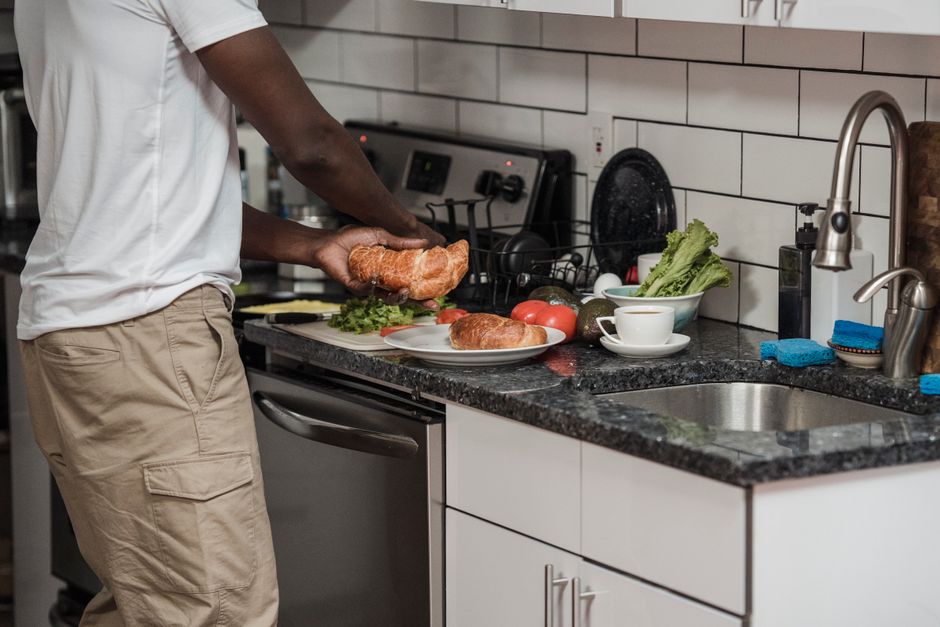
Photo by Sasha Kim on Pexels
Food is where most people have the most room to cut — and also where they feel the changes the most. According to the Bureau of Labor Statistics, Americans spend around $3,200 per year on dining out alone. A home-cooked meal costs about $4–$6 per person; the same meal at a restaurant runs $15 or more. That gap adds up fast.
You don't have to cook every single meal from scratch (that's a fantasy for most people). But shifting even 3–4 meals a week from takeout to home cooking can save $150–$300 a month depending on your household size. That's real money.
Some easy food wins that don't require suffering:
- Buy store brands instead of name brands. The quality is usually identical, and the savings are immediate. Our store brand vs. name brand comparison breaks down 20 categories where generic wins every time.
- Shop with a list and eat before you go. A Dole Food Company survey found that shopping hungry costs an average of $26 extra per trip. One snack before the store = $26 saved. Simple trade.
- Meal prep on weekends. Batch cooking takes 2 hours on a Sunday and eliminates most "I'm too tired to cook" takeout orders. See our guide on how to save money on groceries without coupons for more tactics.
- Use what you already have. Before your next grocery run, spend a week cooking from what's already in your pantry and freezer. You'll be surprised how long you can go — and how much food waste you've been quietly generating.
Step 4: Build the Spending Pause Habit
One of the most underrated tools for spending less is simply pausing before you buy. Not forever — just long enough for the impulse to fade.
The rule that works for me: if something costs more than $30 and it wasn't on my list before I sat down to shop, I wait 48 hours. Most of the time I forget about it entirely. Occasionally I still really want it, and then I buy it — guilt free. The pause isn't about deprivation. It's about separating genuine desire from impulse.
For bigger purchases, extend the wait to a week or two. Try searching for the item on Facebook Marketplace or thrift apps first. You'd be surprised how often you can find exactly what you wanted at a fraction of the price.
Step 5: Find Free (or Cheap) Entertainment
Entertainment is one of those categories where spending a lot doesn't actually correlate with having more fun. I've spent $80 on a concert that was forgettable and had a better time hiking a free trail with friends the following weekend.
Some genuinely good free or near-free options most people overlook:
- Your local library. Books, audiobooks, e-books, magazines, DVDs — all free with a library card. Most libraries also offer free digital access to apps like Libby (audiobooks) and Kanopy (films).
- State and national parks. A $80/year America the Beautiful pass gives you access to all national parks. Individual park visits can cost $20–$35, so if you go more than three or four times, it pays for itself immediately.
- Community events. Farmers markets, outdoor movie nights, free concerts in the park, local festivals. Most cities have more of these than people realize — they're just not as aggressively marketed as things that cost money.
- Rotate streaming services. You don't need all of them at once. Subscribe to one, binge what you want, cancel, move on. You can cycle through Netflix, Hulu, Max, and Disney+ for the same cost as keeping one all year.
Step 6: Make Frugality Automatic
The best frugal habit is one you don't have to think about. Willpower runs out. Systems don't.
A few things worth automating right now:
- Auto-transfer to savings on payday. Move money to savings before you can spend it. Even $50 a paycheck adds up to $1,300 a year — without thinking about it once.
- Set up bill alerts. Know when bills are due so you never pay a late fee. Late fees are the most expensive way to lose money, and they're entirely preventable.
- Annual subscription review. Put a recurring calendar reminder every 3 months to review your subscriptions. It takes 10 minutes and usually finds something worth canceling.
The One Rule That Ties It All Together
Here's the mindset shift that makes everything else easier: living on less isn't about spending as little as possible. It's about spending on purpose.
Frugal people often spend more than average on the things they genuinely love — great food, travel, hobbies, quality gear. They just cut aggressively everywhere else. That's not deprivation. That's priorities.
Pick 2–3 categories where spending brings you real joy. Fund those. Cut everything else with zero guilt. You'll end up with more money, more clarity, and — somewhat unexpectedly — more satisfaction with your spending than you had before.
For a deeper dive into this approach, check out our ultimate guide to saving money in 2026 — it covers the full system from budgeting basics to building long-term habits.
A Quick Summary: Where to Start Today
| Area | Easy Win | Est. Monthly Savings |
|---|---|---|
| Subscriptions | Cancel unused ones | $30–$100 |
| Food | Cook 3–4 more meals at home | $100–$300 |
| Groceries | Switch to store brands | $50–$150 |
| Transportation | Shop car insurance annually | $50–$200 |
| Impulse spending | 48-hour pause rule | Varies |
Stack all of these together and you're potentially looking at $250–$500 freed up every single month — without changing anything fundamental about how you live. That's $3,000–$6,000 a year you either keep or redirect toward something that actually matters to you.
Living on less money isn't a sacrifice. It's just spending with your eyes open. Turns out those are two very different things.
Written by David Carter | savemoneysimple.com
Enjoyed this article?
Get practical money-saving tips delivered to your inbox — no spam, no fluff.


Comments
Post a Comment