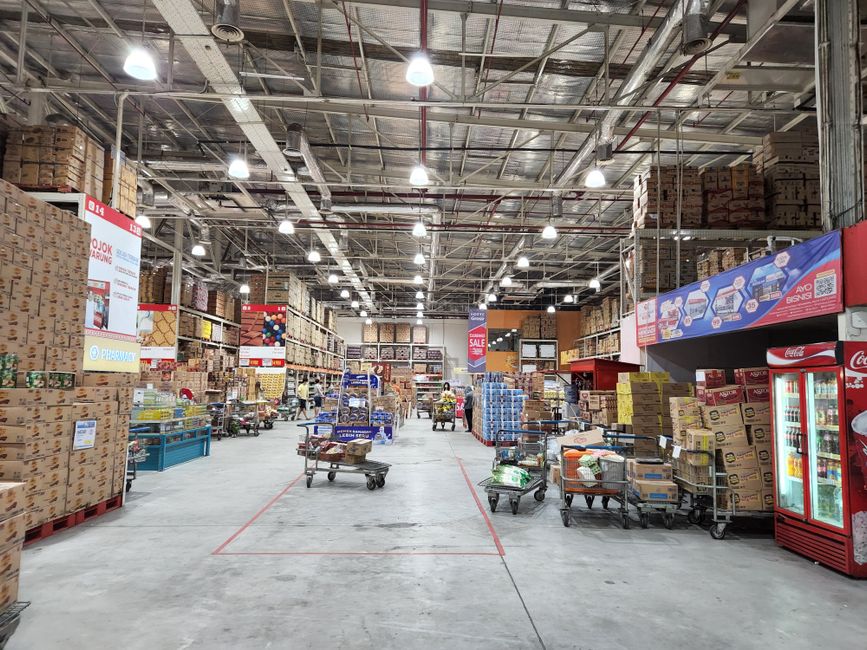
Photo by Antonius Natan on Pexels
That giant tub of peanut butter seemed like such a great idea at the time. And honestly, maybe it was. But the 10-pound bag of spinach that turned into a science experiment by Wednesday? That one still hurts.
Buying in bulk has a reputation as one of the smartest things a frugal person can do. And sometimes that’s absolutely true. But sometimes you’re not saving money — you’re just buying more stuff to eventually throw away. The math only works in your favor if you actually use what you buy. So let’s break it down honestly: when does buying in bulk actually save you money, and when does it quietly drain your wallet?
The Real Math Behind Bulk Buying
The logic is simple: buy more at once, pay less per unit. And it’s real — warehouse clubs like Costco and Sam’s Club typically sell non-perishables at 10–30% less per unit than regular grocery stores. On paper, that’s a solid deal.
But here’s the catch most people miss: the per-unit price only matters if you use every unit. Research from ReFED shows the average American spent over $760 on food that went uneaten in 2024. A big chunk of that waste comes from buying more than we can realistically consume — and bulk packaging makes it incredibly easy to overbuy.
Research from the University of Arizona found that bulk buyers throw out significantly more food than shoppers who buy groceries more frequently. The reason is surprisingly human: we’re great at noticing the sticker price on food, but terrible at mentally accounting for what we’ll throw away later. Buy a 5-pound bag of chicken at a great per-pound price, let two pounds go bad, and suddenly your “deal” just got a lot more expensive.
When Buying in Bulk Actually Makes Sense
Bulk buying shines brightest in two specific situations: when you’re buying something that won’t expire anytime soon, and when you know for a fact you’ll use all of it. Here’s where the savings are genuinely real:
Non-Perishable Pantry Staples
Toilet paper, paper towels, laundry detergent, dish soap, canned beans, rice, pasta, oats — these are bulk buying’s sweet spot. They don’t expire quickly (or at all), you’ll definitely use them eventually, and the savings add up fast. Warehouse clubs keep non-perishables priced aggressively, and if you’re buying them consistently, you stand to save quite a bit.
From what I can tell, paper products are one of the best bulk buys out there. Analysts predict bulk paper towels at Sam’s Club will run around $16–18 for a large pack versus $18–20 at Costco, and both are significantly cheaper than what you’d pay at a regular grocery store for the same number of sheets.
Household Cleaners and Personal Care
Shampoo, body wash, hand soap, cleaning sprays — if you’re loyal to a particular brand, buying a large supply at once is almost always cheaper. These products have long shelf lives, take up minimal space, and you’ll absolutely use them. This is one category where I genuinely don’t understand why people buy single bottles at the drugstore when a 3-pack costs a fraction more.
Frozen Proteins (If You Have Space)
Buying chicken breasts, ground beef, or salmon in bulk and portioning them into freezer bags is a legitimate money-saver — as long as you have freezer space. The key is immediately portioning and labeling everything when you get home, not dumping the whole package in the freezer and hoping for the best. (We’ve all hoped for the best. The best rarely shows up.)
Products You Use at a Predictable Rate
Coffee, vitamins, pet food — anything where you have a real sense of how fast you go through it is fair game. If you drink two cups of coffee a day, you know roughly how many pounds of beans you’ll need in a month. That predictability makes bulk buying safe and smart.
When Buying in Bulk Backfires

Photo by RDNE Stock project on Pexels
Now for the honest part. Bulk buying fails spectacularly in these situations:
Fresh Produce (Unless You Have a Plan)
A 5-pound bag of salad mix for $6 sounds amazing. But if two people realistically eat one bag of salad per week, you just bought five weeks of salad. It’ll be brown soup by next Wednesday. The only way bulk produce makes sense is if you meal prep aggressively, have a large family, or know you’re cooking for a crowd.
Products You’re Trying for the First Time
This is a trap I’ve fallen into. You see a giant jug of some new salsa or a flavored protein powder at Costco, it tastes fine in the sample, and you grab it. Then you get home, try a full serving, and realize you hate it. Now you own a gallon of something unpleasant. Always try a product in a regular size first before committing to a warehouse quantity.
Items You’ll Lose Track Of
Research consistently shows that many families are tempted into bulk purchases of food they’ll never fully consume just to get a good deal on per-unit cost. Out of sight really is out of mind. If your pantry is deep and disorganized, stuff gets lost and expired in the back corners. Before buying in bulk, ask yourself: will I actually see this and remember to use it?
Small Households
If you’re one or two people, bulk buying requires honest self-assessment. A 10-pound bag of potatoes might work great for a family of five. For a single person, you’ll throw away at least half. Scale matters. A lot.
When the Membership Fee Eats Your Savings
As of 2025, entry-tier warehouse club memberships cost $65 at Costco, $50 at Sam’s Club, and $60 at BJ’s. If you’re only shopping there a handful of times a year or buying just a few items, you may not save enough to cover that fee. Do the actual math before renewing.
A Quick-Reference Guide: Buy in Bulk vs. Skip It
| ✅ Buy in Bulk | ❌ Skip the Bulk |
|---|---|
| Toilet paper & paper towels | Fresh salad greens or herbs |
| Rice, oats, dried pasta | Bread (molds fast in bulk) |
| Laundry & dish detergent | Products you’ve never tried |
| Frozen proteins (portioned) | Dairy (unless large household) |
| Coffee & tea | Snacks you eat impulsively |
| Vitamins & supplements | Specialty spices you rarely use |
| Canned goods (beans, tomatoes) | Produce for a 1–2 person household |
How to Actually Make Bulk Buying Work for You
The difference between people who save real money at Costco and people who just spend more there comes down to a few habits:
Go with a list, not curiosity. Warehouse stores are designed to trigger impulse buys. Giant displays, free samples, and shiny new products are everywhere. If you wander in without a plan, you’ll walk out with things you didn’t need and won’t finish. Decide what you’re buying before you go, and stick to it.
Compare the price per unit, not the total price. A $12 pack that comes out to $0.40 per unit beats a $4 pack at $0.60 per unit all day long. Most grocery stores now show unit pricing on shelf tags — actually look at it. And always compare against your regular grocery store price to make sure the bulk deal is actually a deal.
Store things properly. Buying a big bag of flour is a waste of money if it gets weevils by month two. Invest in a few good airtight containers for dry goods, and you’ll get your money’s worth. Studies show the average grocery customer now belongs to 2.8 loyalty or membership programs — so if you’re not using your warehouse membership strategically, you’re just adding another card to your wallet without the benefit.
Split bulk purchases with friends or family. Can’t personally use 50 trash bags before the end of the decade? Text a friend and split the pack. You both get the bulk price, and nobody drowns in excess toilet paper. This works especially well for non-perishable household goods.
Is a Warehouse Club Membership Worth It?
For many households, yes — but it depends on your shopping habits and family size. Studies show families spending $150 per week at regular supermarkets could see potential yearly savings of $2,000 or more by shopping at warehouse clubs strategically. But that assumes you’re buying the right things and not letting food go to waste.
For smaller households or anyone who travels frequently, a membership might not pay off. If you only shop at Costco three times a year, you need to save at least $21.67 per trip just to break even on a $65 membership. That’s doable, but it requires actually showing up — and buying the right things when you do.
One underrated perk worth mentioning: both Costco and Sam’s Club sell gas at roughly 20–40 cents below the local average, which can save you $200–$500 per year depending on how much you drive. For a lot of members, that alone justifies the fee — everything else they buy in bulk is just gravy.
If you want to dig deeper into saving on groceries without stepping foot in a warehouse store, check out our guide on how to save money on groceries without coupons. And if you’re interested in comparing store brand versus name brand products across common categories, our breakdown of 20 products where the cheap store brand wins is worth a look before your next shopping trip.
The Bottom Line
Buying in bulk really is cheaper — but only for the right products, in the right quantities, for the right household. The secret isn’t shopping at Costco. It’s knowing exactly which items to buy there and which to skip entirely.
Think of bulk buying as a tool, not a personality trait. The goal is never to own more stuff. The goal is to spend less money on the things you actually need. Use it that way, and the savings are real and consistent.
And if you’re still on the fence — start small. Pick three items you know you’ll definitely use and buy those in bulk first. See how it goes. If you’re throwing stuff away, recalibrate. If you’re genuinely saving, expand. It’s not complicated. It just requires paying a little more attention than usual.
Which, considering it can save you hundreds of dollars a year, seems like a pretty fair trade.
Written by David Carter | savemoneysimple.com