How to Start Living Minimally (A Beginner's Guide)
How to Start Living Minimally (A Beginner's Guide)

Photo by Kristina Kino on Pexels
Look around your home right now. If you feel a low-level sense of dread — like your stuff is quietly judging you — that's not a coincidence. The average American home contains over 300,000 items, and research consistently shows that living in cluttered spaces raises cortisol levels, the stress hormone. We're literally paying (with money AND sanity) for things that make us feel worse.
The good news? You don't have to sell everything and move into a tiny house. Starting to live minimally is much simpler than Instagram makes it look. Here's how to actually do it.
What "Living Minimally" Actually Means
Let's kill a myth right away: minimalism is not about owning 47 things and living in a white apartment with one plant. That's a Pinterest fantasy, not a lifestyle.
Real minimalism means owning things intentionally — keeping what adds genuine value to your life and letting go of the rest. That's it. If you love books, keep your books. If cooking is your thing, keep your nice knives. The goal isn't deprivation — it's clarity.
From what I can see after years of writing about frugal living, the people who stick with minimalism aren't the ones who go hardcore immediately. They're the ones who make small, intentional changes and actually feel better because of them. That feeling is what keeps you going.
Why Start Living Minimally? (The Real Benefits)
Before you start filling trash bags, it helps to know why you're doing this. The "less stress" promise sounds vague — but the research is surprisingly specific.
You'll spend less money. This sounds obvious, but it goes deeper than just "buy less stuff." When you become intentional about what you own, impulse purchases almost disappear. You start asking "do I really need this?" and the answer is usually no. Over time, minimalist habits can meaningfully reduce discretionary spending — some people report cutting hundreds of dollars per month from their budgets just by being more deliberate.
You'll spend less time cleaning. The math is simple: fewer things = less to organize, clean, move around, and lose. Self-identified minimalists consistently report spending significantly less time on household chores — one study found they had more time and "mental energy" because they'd simplified their living spaces.
Your home will feel different. Studies show that cluttered environments raise cortisol levels. Clearing physical space literally creates mental space. People who declutter often describe it as feeling like they can finally breathe again.
You'll sleep better. Research has found that people with cluttered bedrooms are more likely to have sleep disorders. If your bedroom is basically a storage unit with a mattress in it, your sleep quality is probably suffering — and you might not even connect the two.
Step 1 — Start Smaller Than You Think You Should
The number one mistake beginners make: they try to do everything at once. They spend a whole weekend "going minimalist" and then burn out before lunch on Saturday.
Don't do that. Instead, pick the smallest possible starting point. Not a room — a drawer. Or a shelf. Or just your bathroom counter. Somewhere you can finish in 20 minutes and actually see the result.
That small win matters more than you'd think. The visual of a clean, cleared surface rewires your brain. Suddenly you want to keep going. That's the momentum you're chasing — not perfection on day one.

Photo by Letícia Alvares on Pexels
Step 2 — Use the "Three-Box Method" to Declutter Without Overthinking
Decision fatigue is real. If you stand in front of your closet asking "should I keep this?" about every single item, you'll spiral and keep everything.
The fix is to give yourself a simple system. Grab three boxes (or bags) and label them:
- Keep — things you use regularly and genuinely like
- Go — donate, sell, or throw away
- Maybe — not sure? Box it and store it for 30 days. If you never open the box, you have your answer.
The "Maybe" box is the secret weapon here. It removes the guilt of making a permanent decision right now. Most of the time, after 30 days, you realize you didn't miss those things at all. That's when tossing them feels easy instead of scary.
For clothes specifically, a great trick: flip every hanger backward at the start of the season. After 6 months, any item whose hanger is still backward hasn't been worn. That's your "Go" pile — no debate needed. If you want to sell any of those items, check out our guide on how to sell stuff you don't need and actually make money.
Step 3 — Go Room by Room (In This Order)
Once you've got momentum from a small win, work through your home in this order. It's designed to start with the easiest wins and build up to the harder emotional stuff:
Bathroom first
Expired products, 17 half-empty shampoo bottles, a hair dryer from 2009 — the bathroom is the least emotionally charged room in the house. It's the perfect warmup. Throw away anything expired, anything you haven't touched in 6 months, and anything that "might come in handy someday." It won't.
Kitchen next
The kitchen is usually where "just in case" logic runs wild. Gadgets you used once, 14 mugs for a household of two, a waffle maker that seemed like a great idea in 2019. The rule here: if you haven't used it in a year, it goes. Keep things that serve multiple purposes — a good chef's knife beats a drawer full of single-purpose gadgets every time.
Closet and bedroom
This is where things get real. Clothes carry emotional weight — that dress you wore to a great party, the jeans you'll fit into "one day." Give yourself permission to keep a few sentimental pieces. But for everything else, apply a simple rule: does this fit right now, do I wear it regularly, and do I feel good in it? Three no's and it's gone. If you want to level up your wardrobe after decluttering, our article on building a capsule wardrobe on a budget is a great next step.
Living areas and storage spaces last
Garages, attics, storage rooms — these are where stuff goes to hide. Save these for last when you're in the zone and have already built the habit of letting go. Otherwise you'll open a storage room, get overwhelmed, shut the door, and never come back.
For a deeper dive on the actual decluttering process, including room-by-room checklists, our guide on how to declutter your home fast without losing your mind walks you through it step by step.
Step 4 — Stop the Inflow (This Part Is Everything)
Here's the honest truth: decluttering once is useless if you keep buying at the same rate. You'll be right back to overwhelmed in 6 months.
The real shift in minimalist living is about what comes in, not just what goes out. A few habits that genuinely help:
The one-in, one-out rule. Every time something new comes into your home, something old leaves. Buy new shoes? An old pair goes. New kitchen gadget? An old one's out. Simple, effective, and it forces you to actually think before you buy.
The 24-hour rule for non-essentials. See something you want to buy? Wait 24 hours. If you still want it tomorrow, and it fits your budget, go for it. About 70% of the time, the urge just disappears. Retail therapy is mostly just boredom in disguise.
Unsubscribe from shopping emails. This sounds minor but it's not. Marketing emails are designed by professionals to create desire for things you didn't know you wanted. Remove the trigger and the impulse mostly goes away. Unsubscribing from one brand per day for a week makes a noticeable difference.
Unfollow accounts that make you want to buy things. Social media is one giant, infinite shopping channel. If a particular account consistently makes you feel like your home or wardrobe isn't good enough, that account is costing you money. Unfollow without guilt.
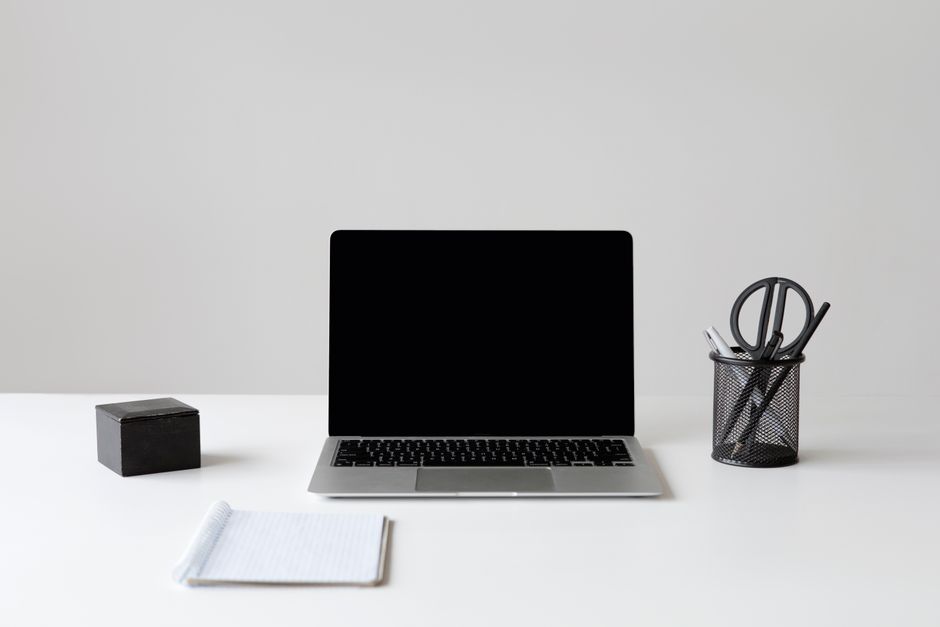
Photo by Hanna Pad on Pexels
Step 5 — Bring Minimalism Into Your Finances
Minimalism and financial health are basically the same philosophy in different clothes. Both are about being intentional — spending on what matters, cutting what doesn't.
A few direct ways minimalist thinking saves money:
Audit your subscriptions. The average American spends $91 per month on subscriptions — and many can't accurately name them all. Go through your bank or credit card statement and list every recurring charge. Cancel anything you haven't actively used in the last 30 days. This one step often saves $20–$50 per month immediately.
Simplify your finances. Minimalism applies to money too. One checking account. One savings account. One credit card if you use credit. The simpler your financial setup, the easier it is to see where money is going — and stop the leaks.
Buy less, buy better. The minimalist approach to purchases: instead of buying three cheap versions of something over a few years, buy one quality version that lasts. It often costs less in total and eliminates the frustration of things breaking constantly.
If you're looking to pair your minimalist mindset with real financial changes, our post on ways to save money without feeling deprived covers practical strategies that work alongside a simpler lifestyle.
What to Do When You Feel Stuck or Guilty
Two feelings will come up as you start living minimally: guilt and attachment.
Guilt — "I spent good money on this." Yes, and that money is already gone. Keeping a thing you don't use doesn't un-spend the money. It just takes up space and reminds you of the purchase every time you see it. Letting it go is the more financially sound decision.
Attachment — "But what if I need it one day?" This is the voice of anxiety, not logic. Think about the last time you actually went back and needed something you had previously decluttered. For most people, it almost never happens. And if it did, you could borrow it, rent it, or buy a second-hand version for a few dollars.
If you're struggling with sentimental items specifically — things tied to people or memories — take a photo before you let it go. The memory lives in you, not in the object. The photo is a backup just in case, and it takes up exactly zero physical space.
What Minimalist Living Looks Like Day-to-Day
Once the initial declutter is done, minimalist living is less about stuff and more about habits. Here's what it looks like in practice:
You stop shopping out of boredom. When "retail therapy" used to fill emotional gaps, you find other things — a walk, a phone call with a friend, cooking something new. The urge to buy doesn't go away immediately, but it does fade over time as you build other habits.
Your mornings get easier. When your closet only contains things you actually like and wear, getting dressed takes 3 minutes instead of 20. No standing in front of a full closet feeling like you have nothing to wear (we've all been there).
Cleaning becomes fast. There's less stuff to move, organize, dust, and trip over. A genuinely decluttered home can be tidied in 15–20 minutes. That's time back every single day.
You notice what you actually value. This is the part nobody warns you about: minimalism tends to clarify what actually matters to you. For some people it's experiences — travel, concerts, dinners with friends. For others it's specific hobbies or relationships. When you stop filling space with things, you figure out what you actually want to fill it with.
Start Today — Smaller Than You Think
You don't need a big plan, a Pinterest board, or a weekend free. You need a drawer and 20 minutes.
Minimalism isn't a destination — it's a direction. Every small thing you let go of is a step toward a life that feels a little lighter, a little calmer, and a lot cheaper to maintain. The 300,000-item average home didn't happen overnight, and it won't get fixed in a day either. But one drawer at a time? That's actually doable.
Turns out, the best things in life really aren't things. (Sorry, every bumper sticker was right about this one.)
Written by David Carter | savemoneysimple.com
Enjoyed this article?
Get practical money-saving tips delivered to your inbox — no spam, no fluff.


Comments
Post a Comment